
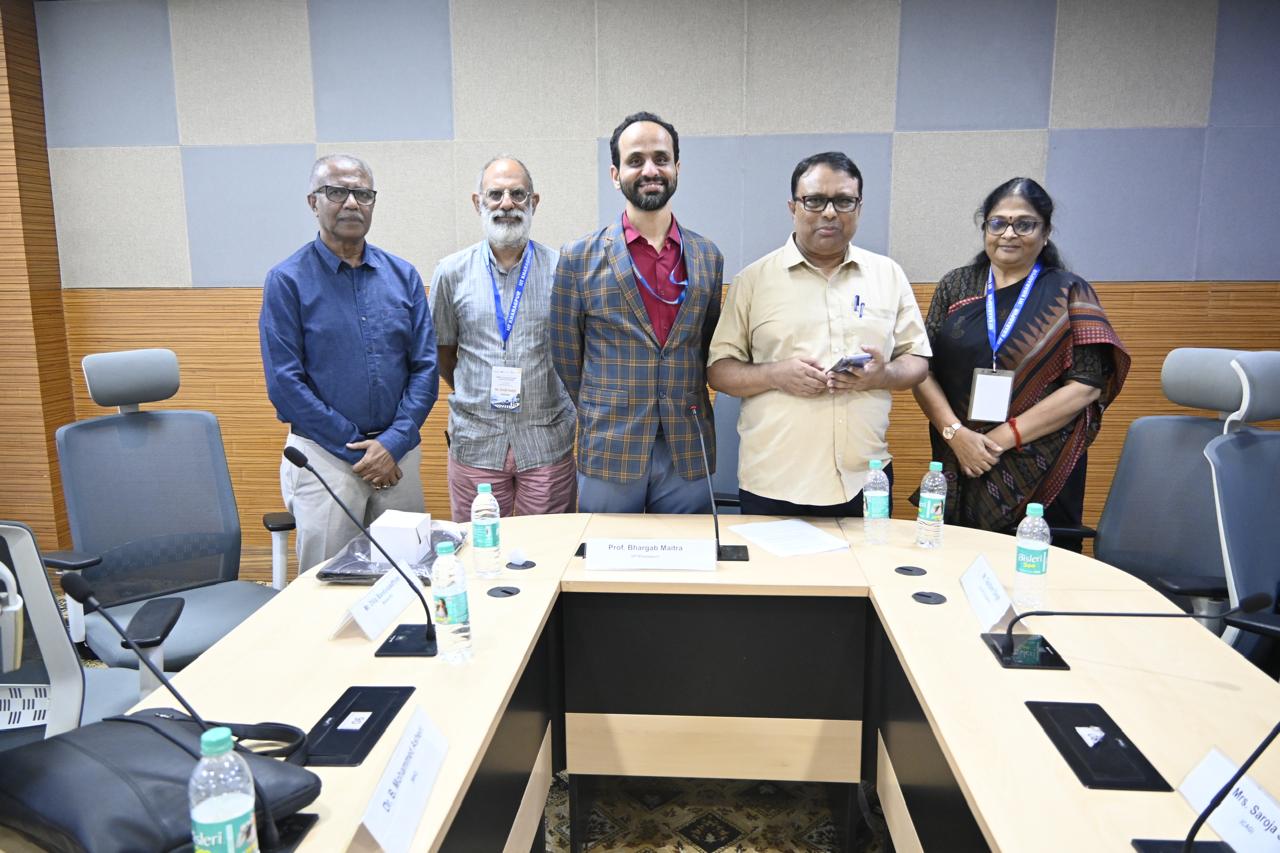
IIT Kharagpur Study: Scientific Speed Management Can Halve Fatal Crash Risk on Indian Highways
KHARAGPUR: A pioneering study by the Indian Institute of Technology (IIT) Kharagpur reveals that scientific speed management interventions can drastically lower fatal crash risks and severity on Indian highways. The research offers a data-driven blueprint for policymakers working toward India’s ambitious national goal: halving road crash fatalities and serious injuries by 2030.
Presented during a high-level road safety dialogue organized by the Road Safety Network (RSN) and IIT Kharagpur, the findings arrive at a critical juncture. India continues to battle a severe road crisis, with road crashes claiming over 1.8 lakh lives in 2024 alone.
Key Findings from NH-16: Slashes Vehicle Speeds up to 45%
The comprehensive study focused on a high-traffic 51-km stretch of National Highway 16 (NH-16) between Balihati and Kolaghat in West Bengal. Researchers analyzed how engineering and design-based speed management measures altered driver behavior and accident outcomes.
The structural interventions yielded immediate, measurable reductions in operating speeds across all vehicular categories:
-
Cars: Operating speeds dropped sharply by 39% to 45%.
-
Heavy Vehicles: Speeds decreased by 29% to 33%.
-
Two-Wheelers: Speeds were curbed by 18% to 28%.
Crucially, the study documented a parallel plunge in total fatalities, crash severity, and the mathematical probability of an accident turning fatal in zones where these scientific design modifications were active.
The Deadly Cost of Speeding
Speeding remains the single largest killer on Indian roads. According to the Ministry of Road Transport and Highways’ (MoRTH) Road Accidents in India 2024 report, over-speeding triggered 62% of all road crashes, resulting in more than one lakh deaths nationwide. Furthermore, vulnerable road users face a disproportionate threat, with pedestrians accounting for 20.6% of all highway fatalities.
“The Safe System approach reminds us that while people make mistakes, our infrastructure and policies must ensure those mistakes are not fatal,” noted Prof. (Dr.) Bhargab Maitra of IIT Kharagpur. “Scientific speed management saves lives by aligning highway speeds with the actual environment and the safety needs of pedestrians and cyclists.”
A Comprehensive Framework for Safer Highways
The high-level dialogue brought together top government officials, WHO experts, and organizations like the SaveLIFE Foundation to review evidence-based policy interventions. To translate these findings into national action, the Road Safety Network submitted a comprehensive list of recommendations to MoRTH and state transport authorities:
-
Risk-Based Limits: Rationalizing speed limits based on specific road functions and local pedestrian risks.
-
Smart Zoning: Implementing context-sensitive speed zoning frameworks around high-risk intersections.
-
Tech Enforcement: Scaling up technology-enabled speed traps, radar tracking, and automated e-challan systems.
-
Inter-Sector Coordination: Building better data systems and institutional coordination across the transport, police, healthcare, and urban development sectors.
By shifting from reactive policing to scientific highway engineering, India can construct a forgiving road network that safeguards every commuter.


