
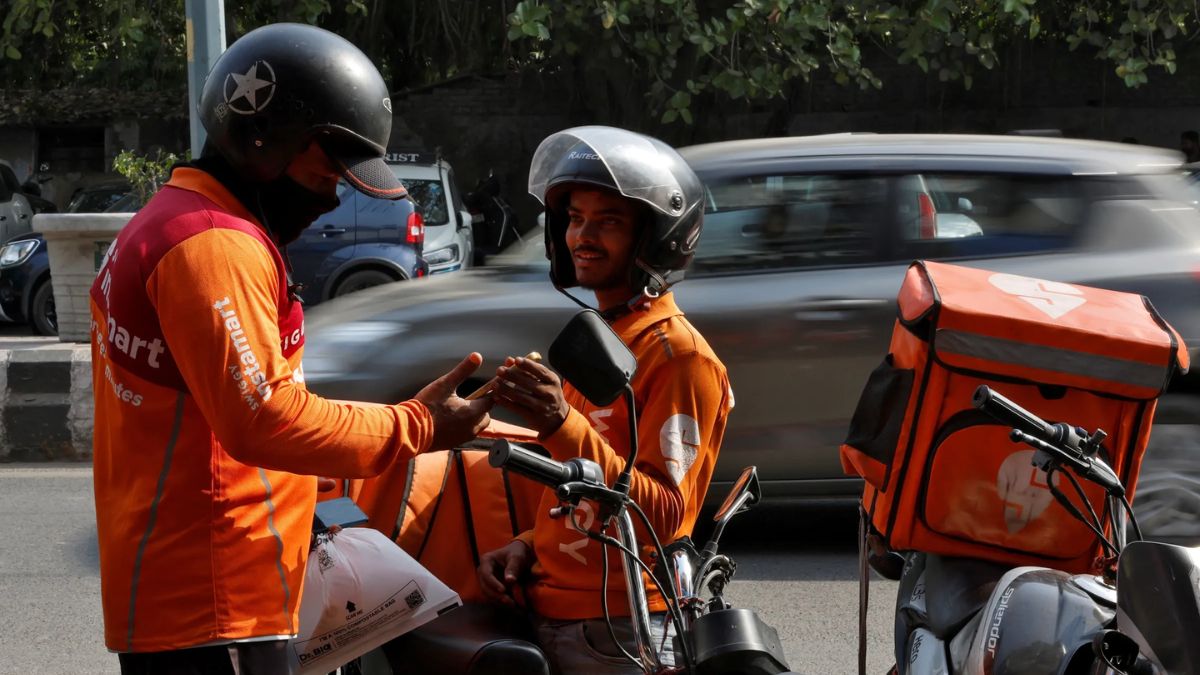
Only 3 in 10 Gig Workers Own Term Insurance, Despite 9 in 10 Prioritizing Family Financial Goals
New Delhi: Axis Max Life Insurance Ltd. formerly known as Max Life Insurance Company Ltd (“Axis Max Life”/ “Company”), in collaboration with Kantar, the world’s leading marketing data and analytics company, has announced findings from the seventh edition of its India Protection Quotient (IPQ 7.0) survey, spotlighting a significant protection gap among gig workers compared to urban India.
Unveiling a stark contrast, the findings highlight that while urban India’s Protection Quotient has reached an all-time high of 48, gig workers continue to trail with a score of 41. This reflects significant gaps in knowledge, security levels, and insurance ownership of the working community. As per IPQ 7.0, only 69% of gig workers own life insurance, considerably lower than the national urban average of 78%. This is despite 89% of them having strong family-oriented financial goals, surpassing the 81% urban India average, and a higher likelihood of adhering to healthy lifestyle practices.
Prashant Tripathy, CEO & Managing Director, Axis Max Life Insurance, commented on the findings, stating: “The findings from IPQ 7.0 uncover a critical insight: while nearly 90% of gig workers place high importance on securing their family’s financial future, only 3 in 10 currently own term insurance. This highlights a significant protection gap within a rapidly expanding segment of India’s workforce.
As an industry, we must move beyond traditional distribution models and reimagine how protection is delivered — through deeper collaboration with digital platforms, policymakers, and ecosystem enablers. At Axis Max Life, we remain committed to shaping an inclusive insurance landscape that reflects the realities of modern work and ensures no segment is left behind.”
Lower Financial Preparedness and Reactiveness in Planning
The findings reveal that while gig workers are marginally more inclined to save upon receiving income, they are notably less proactive in financial planning, with nearly 40% admitting to not taking active steps towards securing their financial future. In comparison, less than 30% of urban Indians report such financial inertia. This limited reactiveness, coupled with relatively low life insurance ownership, leaves a large section of the gig workforce financially vulnerable.
High Family Focus, Yet Inadequate Protection
Despite their lower financial protection, gig workers exhibit a strong intent to provide for their families. However, one in three gig workers believe their family would have no financial support in the event of their untimely demise, 10 percentage points higher than the urban average. Though two in three gig workers acknowledge the importance of term insurance, only a third currently own one, and even among term insurance owners, less than half feel adequately protected.
Call for Inclusive Protection Solutions
These insights reflect a need for more inclusive and accessible protection solutions tailored to the gig economy, a sector that continues to expand rapidly yet remains outside the fold of traditional financial safety nets. As the nature of work evolves, so must the industry’s approach to financial inclusion and long-term protection.

